Florence in Art Déco Style: timeless elegance at the exhibition “Florence Déco. Atmospheres of the 1920s,” at Palazzo Medici Riccardi until August 25
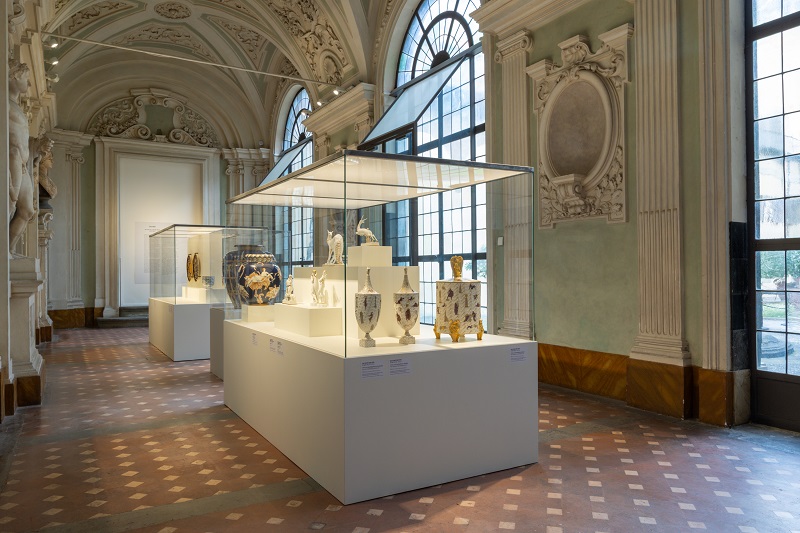
Florence, April 1, 2026. Opening tomorrow in the halls of Palazzo Medici Riccardi is the beautiful exhibition “Florence Déco. Atmospheres of the 1920s,” which will run until August 25, 2026.
Promoted by the Metropolitan City of Florence and organized by the MUS.E Foundation, in collaboration with New York University Florence, the G.P. Vieusseux Scientific and Literary Cabinet, and the Richard Ginori Archive Museum of the Doccia Manufactory, the exhibition—curated by Lucia Mannini, supported by a scientific committee chaired by Carlo Sisi and composed of Francesca Baldry, Giovanna Lambroni, Vanessa Gavioli, Lucia Mannini, Oliva Rucellai, and Valentina Zucchi—recounts a decade of extraordinary creative vitality that saw Florence as an absolute protagonist.
Ceramics, furnishings, jewelry, textiles, clothing, advertising posters, and more reconstruct the cultural climate of the 1920s, creating a dialogue between artists and manufacturers who were able to renew tradition with an openness to avant-garde movements and international taste. From Gio Ponti’s contribution to Richard-Ginori to the ceramics of Galileo Chini, from the creations of Thayaht to the refined jewelry sought by international high society, from the early Florentine production of Salvatore Ferragamo and Gucci to the magnificent silks appreciated by D’Annunzio, and even to captivating advertising posters: the exhibition offers a broad, non-localized interpretation of Florentine Déco, highlighting its national and international significance. It is a journey into the atmosphere of an era that left a lasting mark on the city’s modern identity.
The exhibition is set within an international context whose central moment is the 1925 Exposition Internationale des Arts Décoratifs et Industriels Modernes in Paris—an event that marked the success of a new modern taste based on elegance, luxury, and collaboration between decorative arts and manufacturing. Italian artists, including many from Florence, took part in the Paris exhibition, confirming the city’s active role in the artistic production of the period. The 1920s were a time of great cultural dynamism for Italy. After the end of the First World War, a renewed interest in the applied arts emerged, seen not only as an expression of new aesthetic values but also as an economic and productive resource. In this climate, Florence established itself as an important creative center, thanks to the presence of artists and manufacturers who were able to capitalize on technical expertise while engaging with the languages of modernity.