The breath of color in 70 Works: Florence’s tribute to Mark Rothko on view until August 23 at Palazzo Strozzi
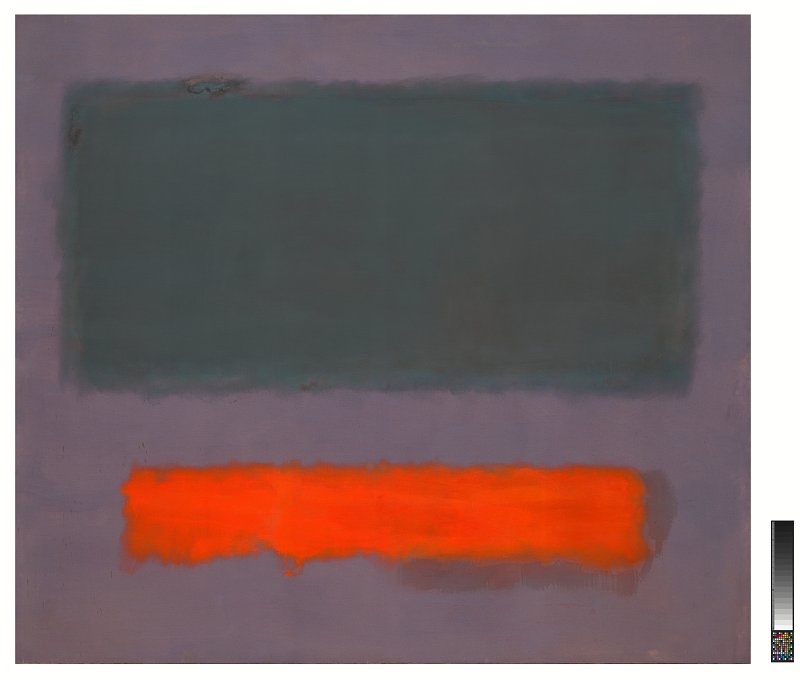
Florence, April 2, 2026. The exhibition at Palazzo Strozzi dedicated to Mark Rothko (1903–1970), the undisputed master of modern American art, runs through August 23, 2026. Curated by Christopher Rothko and Elena Geuna, Rothko in Florence is a unique project conceived specifically for Palazzo Strozzi to celebrate the special bond between the artist and the city. The palace’s architecture and Florence itself provide the ideal setting to explore how Rothko translates into painting the tension between classical balance and expressive freedom, creating through color a new perception of space that transcends the two-dimensionality of the canvas.
The exhibition at Palazzo Strozzi retraces Rothko’s entire career through more than 70 works from prestigious private collections and major international museums, including the Museum of Modern Art (MoMA) and the Metropolitan Museum of Art in New York, the Tate in London, the Centre Pompidou, and the National Gallery of Art in Washington.
From Palazzo Strozzi, the project extends into the city of Florence, involving two places especially dear to the artist in special sections hosted by institutions of the Italian Ministry of Culture: the Museo di San Marco, which reopens its full museum itinerary and the Beato Angelico Room with five works displayed in cells frescoed by Beato Angelico, and the vestibule of the Biblioteca Medicea Laurenziana, where two works are placed in dialogue with the space designed by Michelangelo.
Rothko’s first encounter with Florence dates back to 1950, during a trip to Italy with his wife Mell. He was deeply fascinated by the paintings of Beato Angelico at the Museo di San Marco and by the architecture of the vestibule of the Biblioteca Medicea Laurenziana. This unique environment—visited again by the artist in 1966—became a source of inspiration for the Seagram Murals, created in the late 1950s. In works with more delicate tonalities, the influence of Italian Quattrocento art, and particularly of Beato Angelico, is clearly perceptible. Both artists share a desire to evoke a sense of transcendence, a dimension that is at once distant and deeply familiar. While Beato Angelico combines the sense of the divine with earthly reality through the emotion of painting, Rothko constructs fields of color capable of generating a range of emotional tensions, challenging established ideas of abstraction and color theory.